
Rationale: Why use a Random Wire?
Recently, I’ve been operating with end-fed antennas. For my style of portable operating, they are the simplest to set up. However, most end-fed antennas are monoband unless you’re willing to string up a half wave for 80m, some 125 feet or so of wire. I find that this limits my choice of operating location, especially at my current apartment dwelling. Even when I have room for a half wave for 80m, I think they still require a touch up tuner to bring SWRs within acceptable limits on all bands.
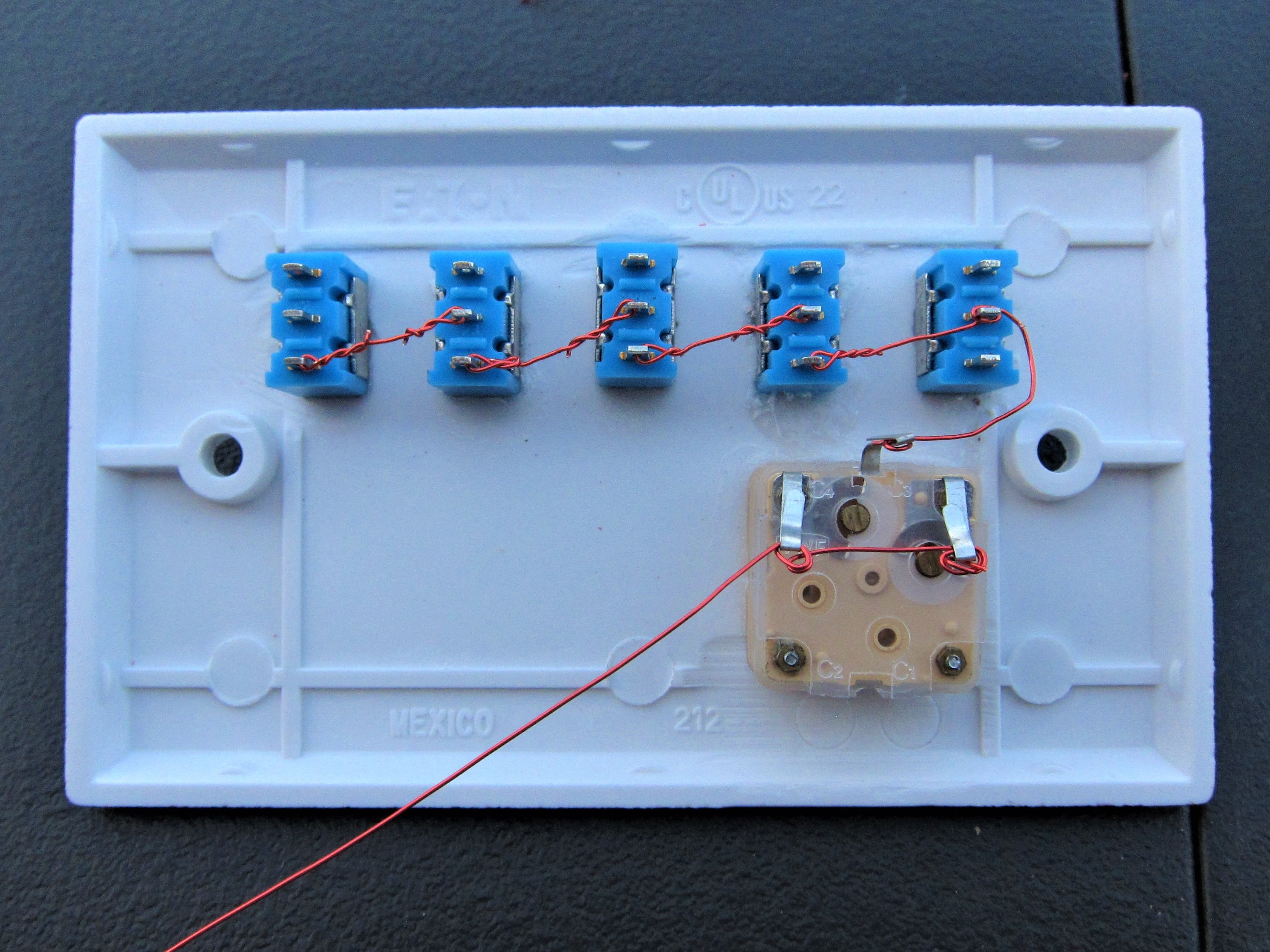
Since I was going to build a tuner anyway, I decided to try the random wire antenna. To accomplish this, I built up a VK3YE style L-match tuner and a 9:1 unun on a 114-61 toroid in one package.
From what I have gleaned from internet research, mixes -2, -43, and -61 are common places to start. Dan, KB6NU started with a mix-2 then went on to a mix-61. Peter, VK6SYF started with a mix-2 then eventually ended up with a mix-43. Palomar Engineers state that mix-43 transforms 3-60 MHz well while mix-61 transforms 1-300 MHz. According to the research performed by a ham on this YouTube video (I wish he gave his callsign), Mix-43 is better for 40m and below. I went with the mix-61 toroid since I’m really wanting to operate from 40 meters up to 10 meters.

As you can see above, I used the inductance values of .5uH, 1uH, 2uH, and 4uH. To calculate the number of turns I would need, I entered these values into the calculator provided on toroids.info. With all the switches engaged, this tuner will provide 7.5uH of inductance.

The 9:1 unun looks complicated, but in practice it is easy to hook up properly. Using different colored wire makes it more straightforward. The first winding, which uses a blue/white wire, goes from ground, around the toroid, to the hot from the transceiver, or tuner in this case. The second winding, using a blue wire, connects the hot from the transceiver/tuner, goes around the toroid to the beginning of the third winding. The third winding, using an orange wire, goes around the toroid then to the random wire.

Put another way, the order is like this:
- connection to transceiver ground and counterpoise
- blue/white wire winding
- connection to transceiver/tuner hot
- blue wire winding
- connection of blue and orange wires together at toroid
- orange wire winding
- connection to random wire
My setup was difficult to fit in the single gang electrical enclosure. Admittedly, I’ve always had trouble fitting projects into boxes. I could be trying to shoehorn too much into too little of a space. In fact, you might have noticed a fifth inductor in the photo above. It was for 8uH but it broke off trying to fit it inside so I’ve left it off for the time being.
The beauty of this enclosure, however, is that it is a reasonable size for portable operation and the parts are easy to find. All it took was one trip to the hardware store to find the single gang blank cover and the shallow single gang box. I believe I spent $5 total on the box. Make sure you use plastic here! Metal will interfere with the tuner and transformer both.
With the whole thing buttoned up, it’s time to run some tests. When researching wire lengths, two sites rose to the top. Jack, VE3EED(SK) recommends short antenna wire lengths of 29, 35.5, and 41 feet (among others increasingly long) with a 17ft counterpoise. Mike, AB3AP went to the trouble of creating a code based calculator to determine then visualize antenna lengths. The first lengths it calculates are anything between 33 and 36 feet, then again between 38 and 42 feet, roughly.
My Jackite mast is 33 feet tall since I gutted my other fishing pole to add a few more feet, so first I’m going to try the recommended wire length of 29 feet in the post for next week.
According to my NanoVNA, I’ve already achieved good matches on 10m and 20m with the 29 foot wire. I’ll be sure to share the results of which SWRs I achieve with certain inductances and capacitor settings along with Reverse Beacon Network hits, propagation permitting.
And of course, a big thanks to Peter, VK3YE for inspiration on the tuner design. Although mine is pretty ugly looking, it’s given me quite a platform upon which to experiment and publish results, then maybe build a refined version that’s ready for the field.
More Posts in this Series
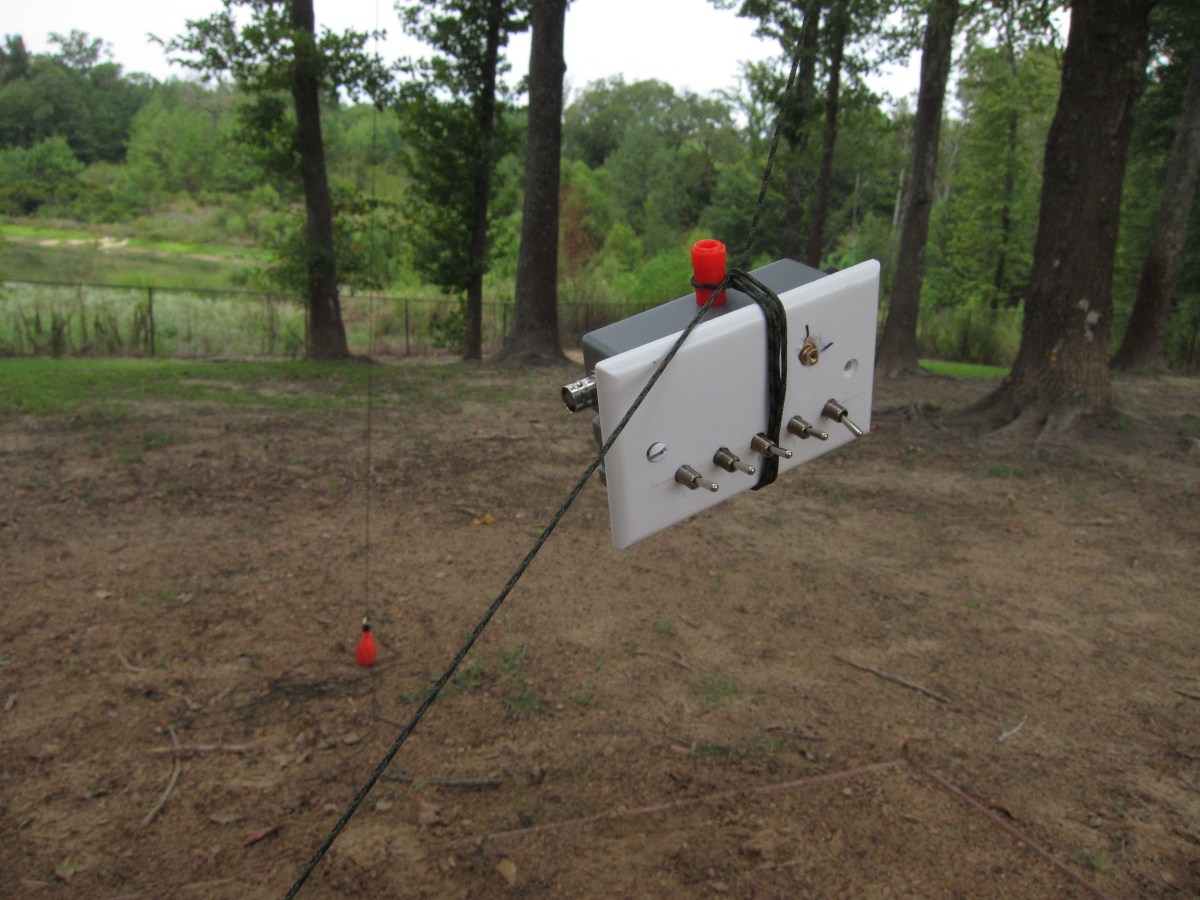
9:1 Random Wire Antenna and L-Match Tuner: 29ft Wire Experiment
How well does a 29ft wire work with a 9:1 unun and an L-match tuner? Which bands are available?

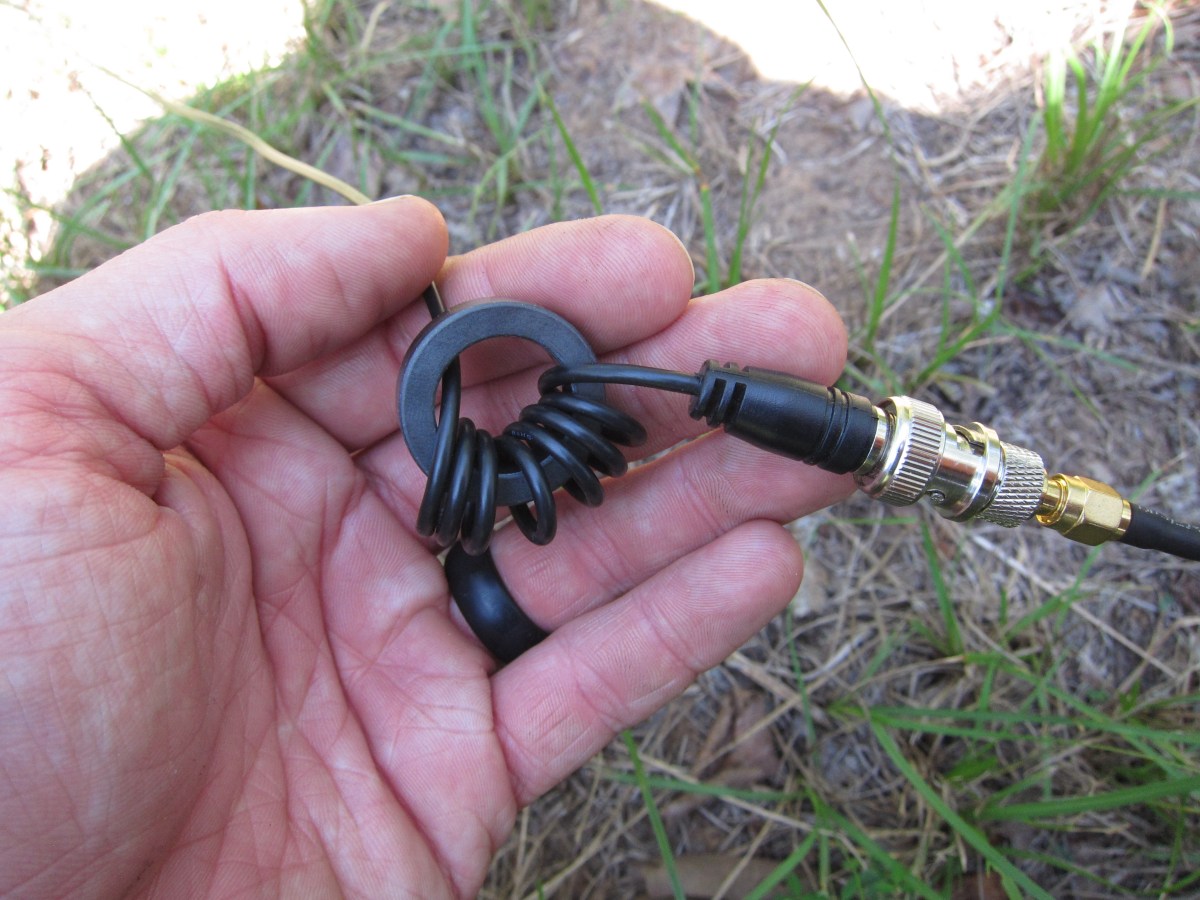
9:1 Random Wire Antenna and L-Match Tuner: Current Chokes
Current chokes help a random wire antenna greatly. But how much? So much so that they allow for operation on new bands?
 Amateur Radio Station WB0ISG