
For this run of experiments, I decided to add a current choke to my setup. In short, it did make things more stable but the SWR readings varied from slightly better to slightly worse. In keeping with tradition and maintaining experimental rigor, I strung up the 29 foot radiator vertically using my throw line.
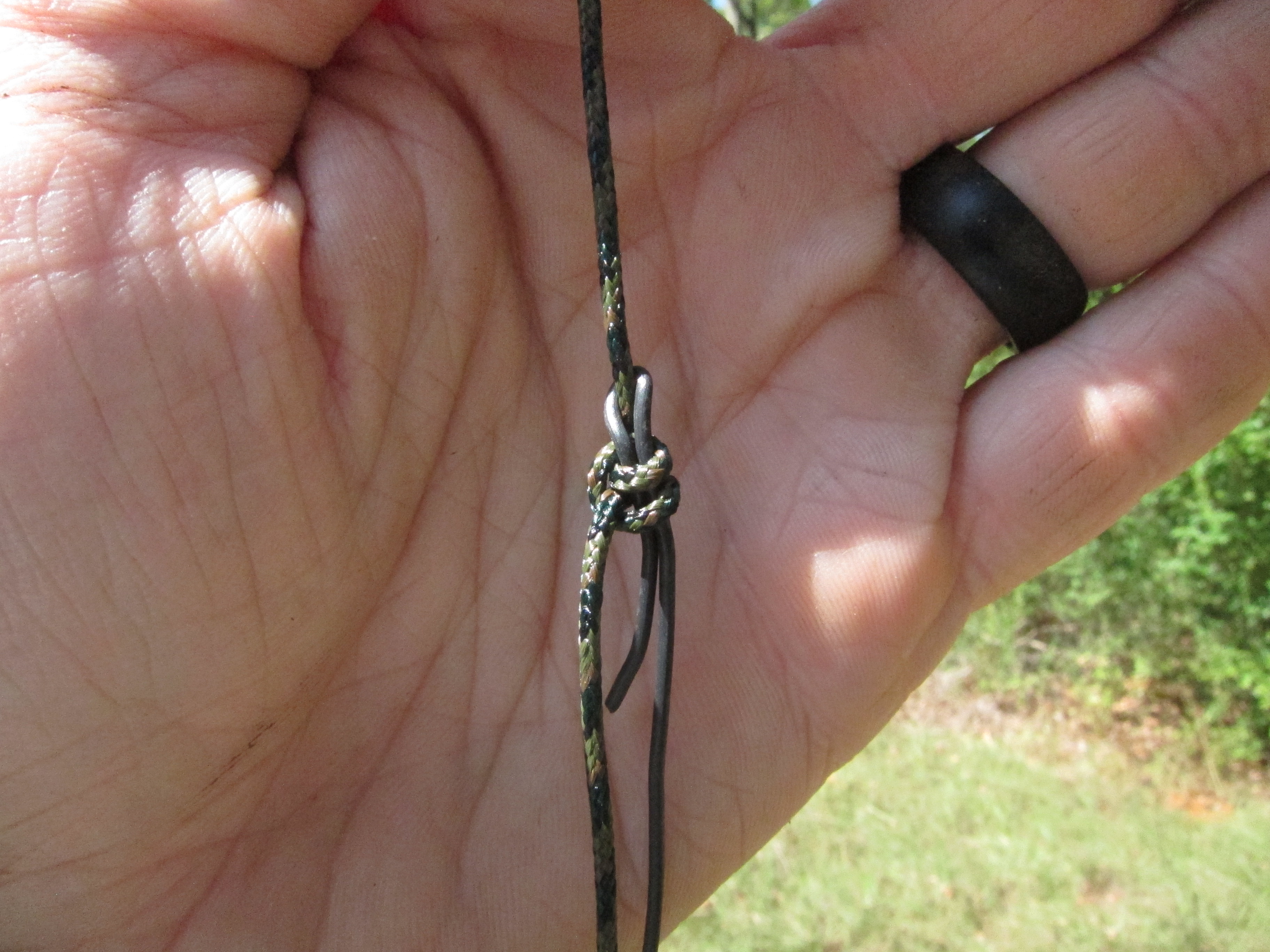
The knot here I’m using is a clove hitch in the throw line with the radiator bent over the standing end (the end under tension up in the tree) and back through the loops. It works great for hoisting up this line because it can be tied on the bight (in the middle of the rope; no loose end necessary) and is easy to release. It’s really only a matter of pulling up on the loop in the conductor.
Results
When I experimented last time with this 29 foot wire, I had a feeling that I could get more predictable results with a current choke, eliminating high SWRs at the radio end of the coax. Sure enough, this was the case. The choke is nothing special. I just threaded the BNC through a 114-43 mix toroid seven or eight times.

However, 30m was now unavailable for the shorter coax, meaning the coax was an integral part of the antenna’s radiation while operating without a current choke. This is far from ideal because I’ve heard stories of common mode currents messing with keyers the like. If it’s messing with the keyer, other things could be cooking in the radio as well.
To reiterate from last time, the tuner is capable of 0.5uH to 7.5uH of inductance and up to 220pF of capacitance. I don’t know the value of capacitance, so I’m using a scale of 0 to 5 on my knob.
| 29ft radiator | 10m | 12m | 15m | 17m | 20m | 30m | 40m | 60m | 80m | 160m |
| 3ft coax with choke | SWR=1.3 L=0.5uH C=1 | SWR=1.3 L=0.5uH C=1 | SWR=1.1 L=1uH C=1 | SWR=1 L=1.5uH C=1 | SWR=2.4 L=2uH C=4 | n/a | SWR=1.4 L=4 C=4 | n/a | n/a | n/a |
| 25ft coax with choke | SWR=1.1 L=0.5uH C=1 | SWR=1.7 L=0.5uH C=2 | SWR=1.4 L=1uH C=1 | SWR=1.9 L=1uH C=3 | SWR=1.6 L=2uH C=4 | SWR=1.8 L=3.5uH C=5 | SWR=1.7 L=1uH C=5 | n/a | n/a | n/a |
Conclusions
It seems as if the 29 feet of wire is just not going to cut it for the bands 60 and lower. I would like to have 80 meters for the winter at night. I’m wondering if the lack of 30m and the high SWRs for 20m are due to the length being super close to a half wavelength for both of those bands. Maybe 29 feet is a bad length, or maybe my wire isn’t “random” enough and needs a little trim to be completely unresonant.
Also, given that I need to carry either a NanoVNA or a SWR indicator (a pending scratch build) I’m beginning to think that this particular antenna was fun to build and experiment with, but isn’t one that I’ll be taking out to the field any time soon. I get quicker, more predictable results with end feds, verticals, and dipoles. Often with less weight, bulk, and complication.
However, I plan to continue the experiments just to see what results I can get. After all, 29 feet is short and maybe longer wires will be the ticket to better results.
More Posts in this Series

9:1 Random Wire Antenna and L-Match Tuner: The Build
The random wire antenna is among the more popular options for portable operating in ham radio. Here, I scratch build the 9:1 unun and L-match tuner within a single enclosure in order to further explore which lengths of wire are best portable random wire operating.

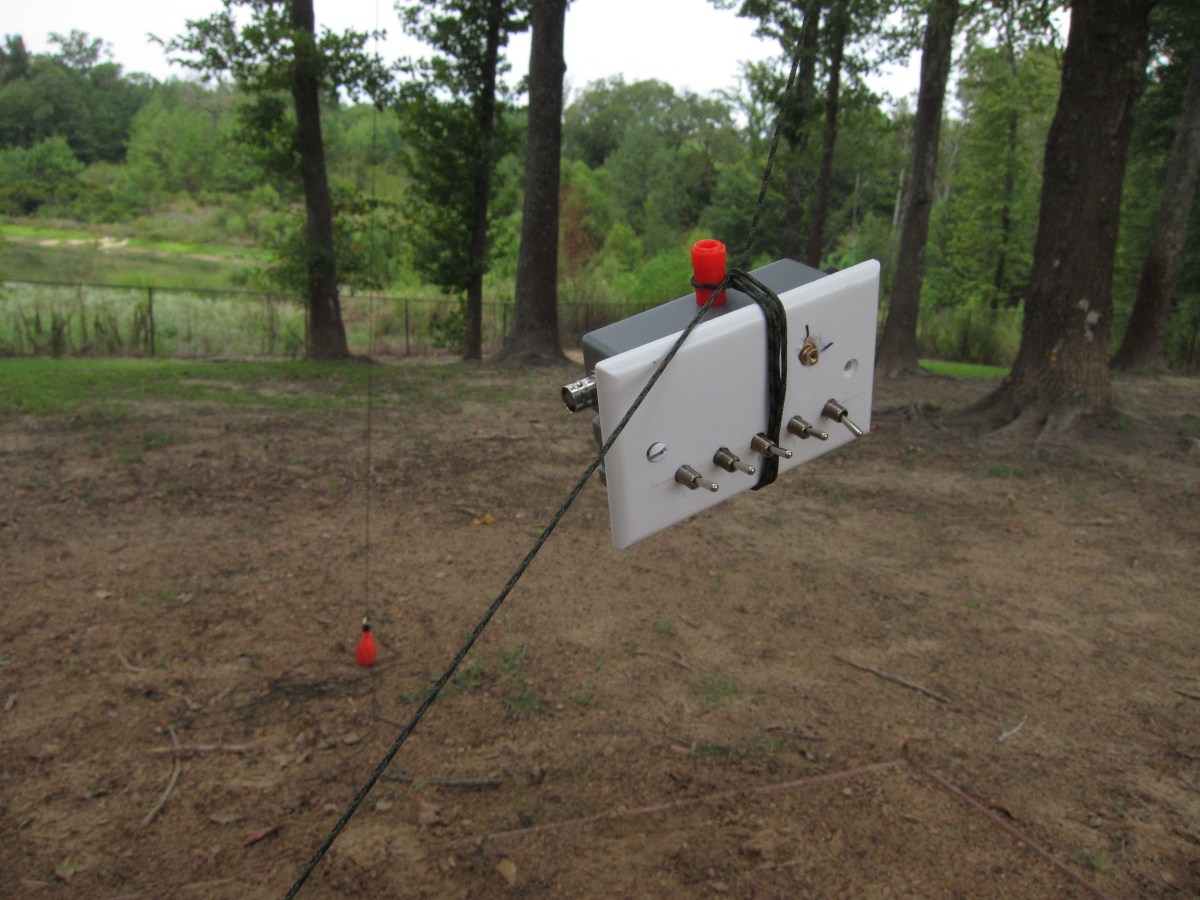
9:1 Random Wire Antenna and L-Match Tuner: 29ft Wire Experiment
How well does a 29ft wire work with a 9:1 unun and an L-match tuner? Which bands are available?
 Amateur Radio Station WB0ISG