
Whenever I’m out in the field operating with my MTR3b, I’ve always wondered how well matched my antenna is to my transceiver. One way I’ve circumvented bad matches is by using a dipole or a vertical antenna which aren’t prone to high SWRs if properly tuned once built.
However, part of the appeal of this particular radio is to cut down on weight and bulk, which means that the end fed half wave (EFHW) could come into its own here, especially the connect-direct-to-transceiver variety that Adam, K6ARK proposes.
One of the more notable shortcomings of the MTR3b is that it has no high SWR protection, no SWR indicator, and the part that is most susceptible to high SWR damage–the finals–are delicate on this radio.
I’m hoping that the N6ARA MiniSWR kit can warn me to the potentially high SWRs that an EFHW can produce if not adequately deployed.


Like a lot of the kits that I’ve done recently, the parts count is low. That’s not a bad thing since I’m pretty short on free time these days. What you see above is what is included in the package. If you’re short on time, eyesight, or dexterity, assembled versions are available. The 3d printed housing can be ordered separately on Ara’s website as well.
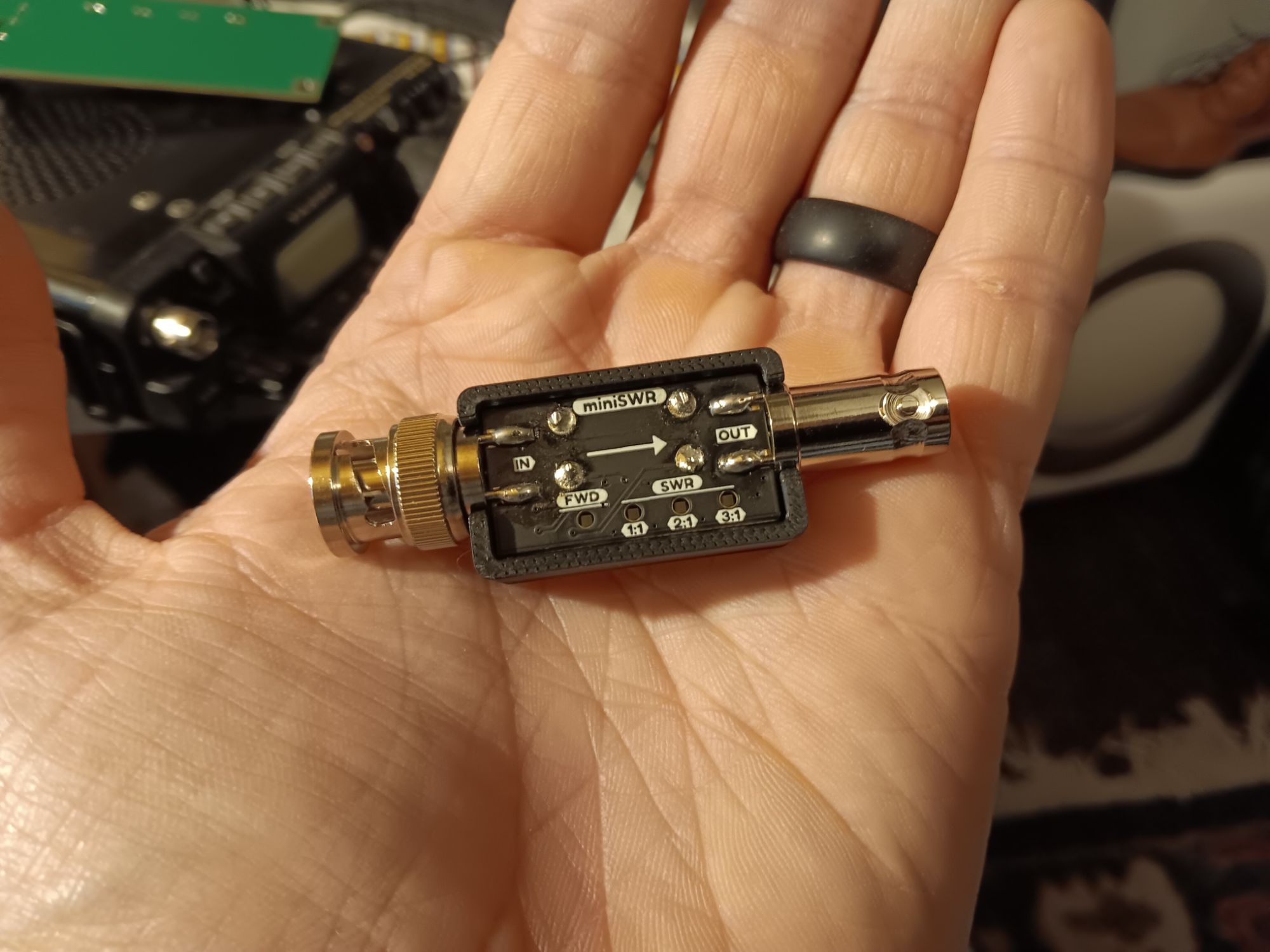
Construction of this kit took me around 45 minutes, alignment process included. The only things to solder in this kit are the two wires wound around the toroid and two BNC connectors. The adjustment pot and LED match indicators are all pre mounted SMDs. The instructions are extremely well written and have excellent color photos demonstrating procedures.


The instructions in the kit state that alignment is accomplished with your QRP transceiver and a dummy load. For this part of the build, I used my FT-818 and my Four States QRP Group Dummy Load. Turning the trim pot to the proper setting was easy. All I had to do was key down, look at the reflected power, then turn the trim pot, then repeat the process. Getting the red reflected LEDs to extinguish was no problem at all. I confirmed my calibration by hooking it up to my QMX. It confirmed that my SWR was flat.
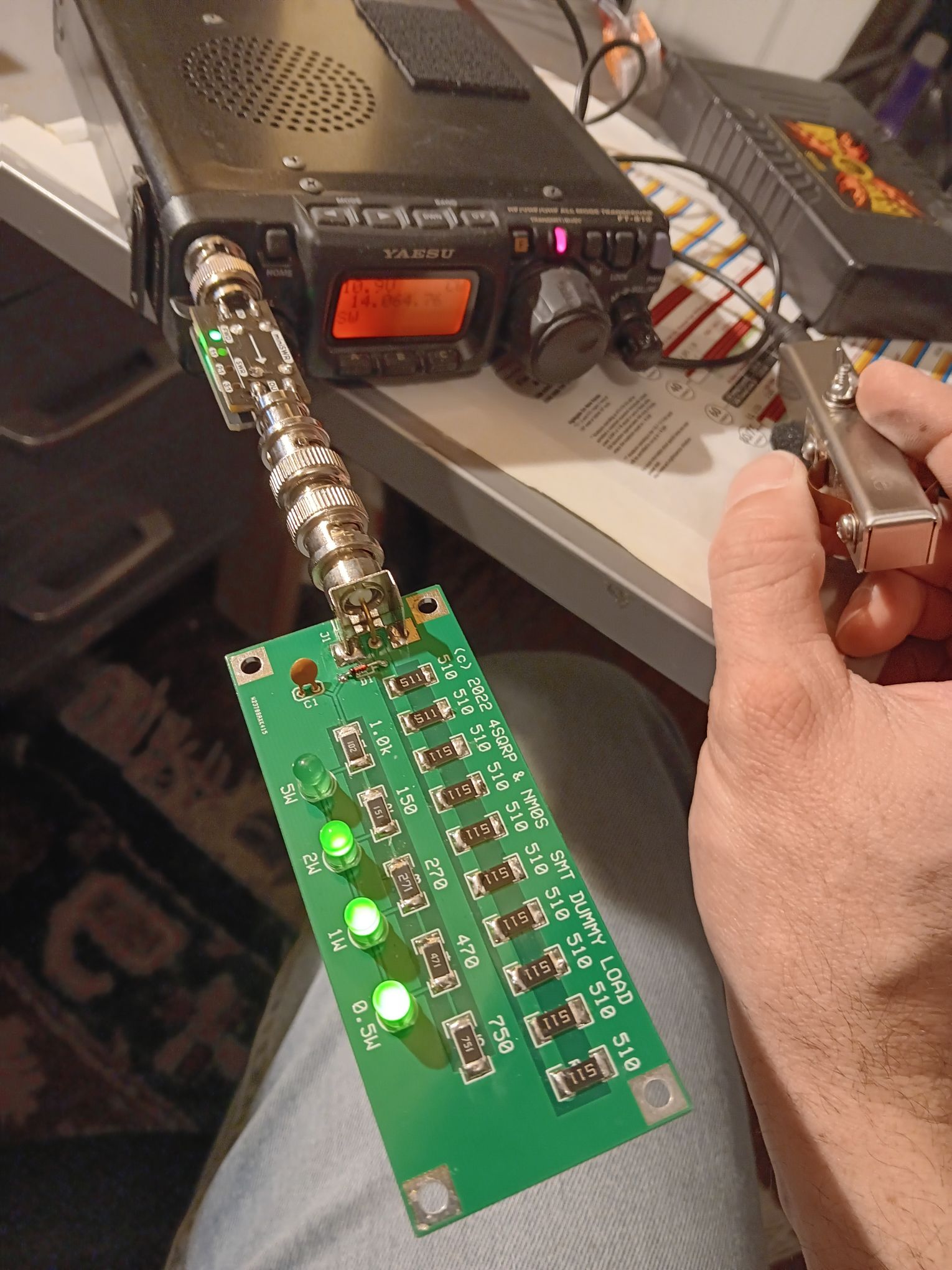
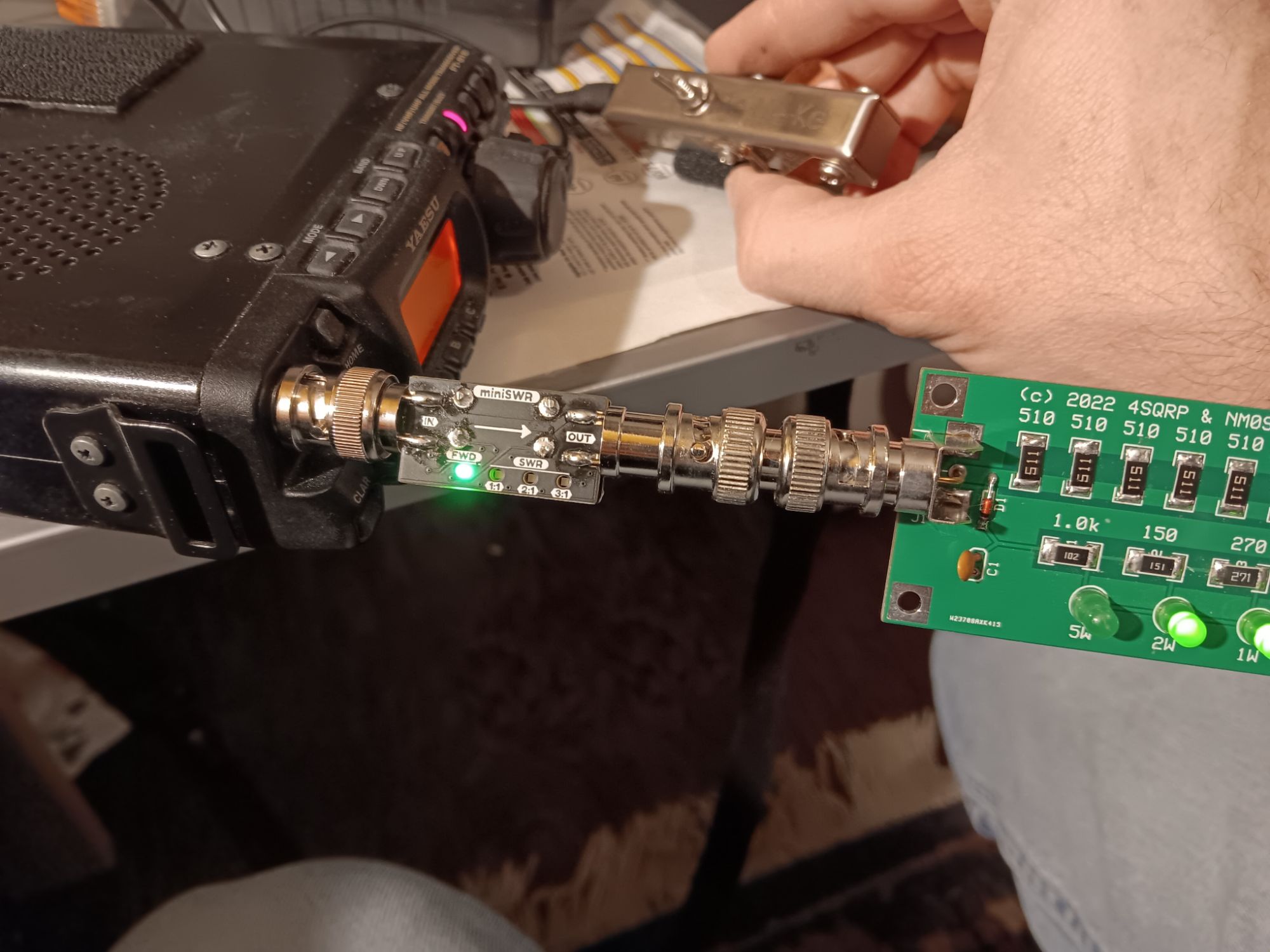
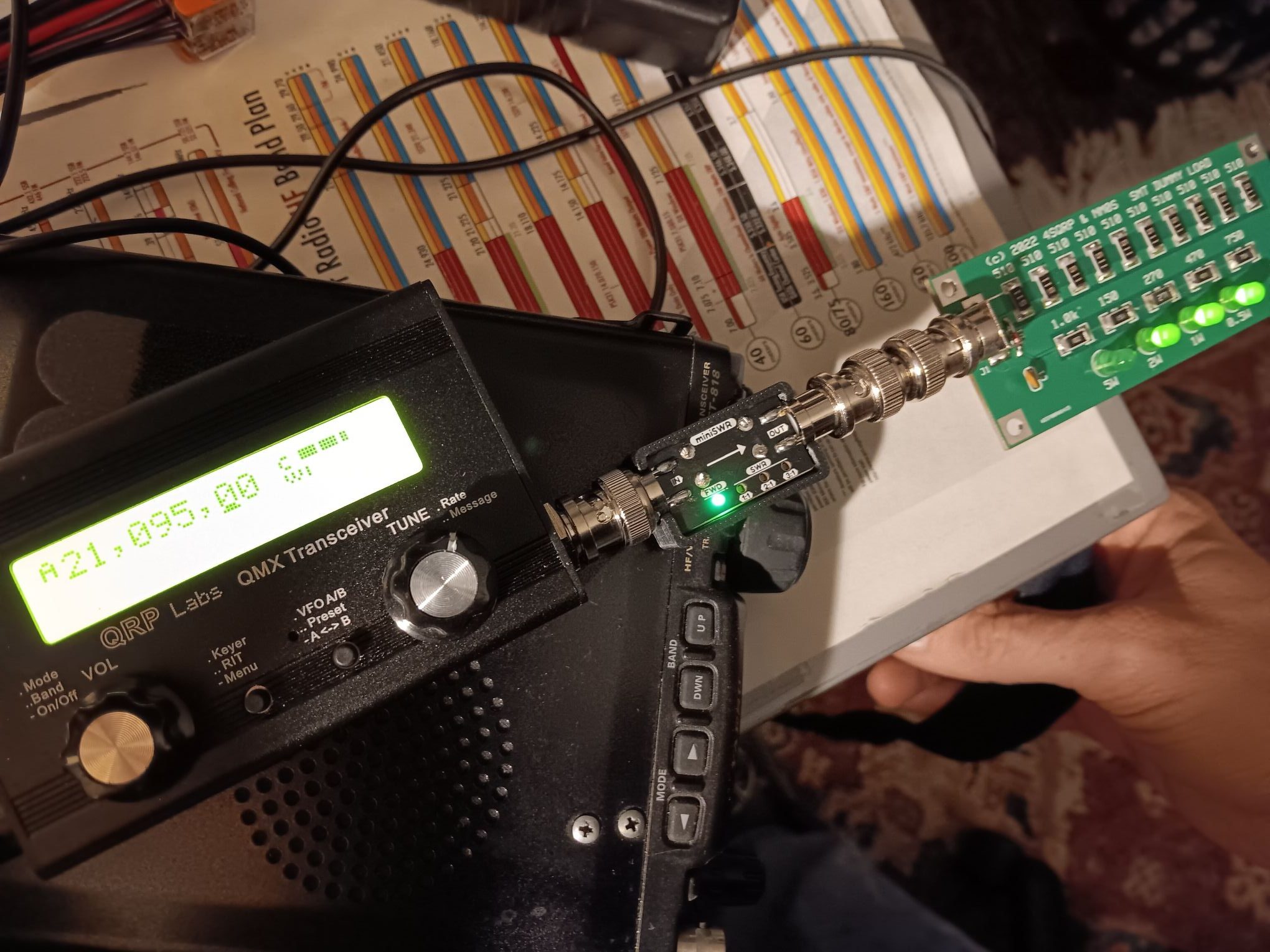
As you can tell by the photo above, I am on 15 meters, while the kit is built for 20 through 80 meters. I’m still hoping that the reading that both my FT-818 and my hi-bander QMX gave me are accurate.
The charm of this particular SWR meter lies in its compact form and light weight, perfect for treks up high mountains or down long trails. Tests at the bench show that it works on a dummy load. I’m excited to see how it does its job out in the field.
 Amateur Radio Station WB0ISG